
Fill out the form below and our team will be with you in no time.

Need help?
 Start conversation
Read mode
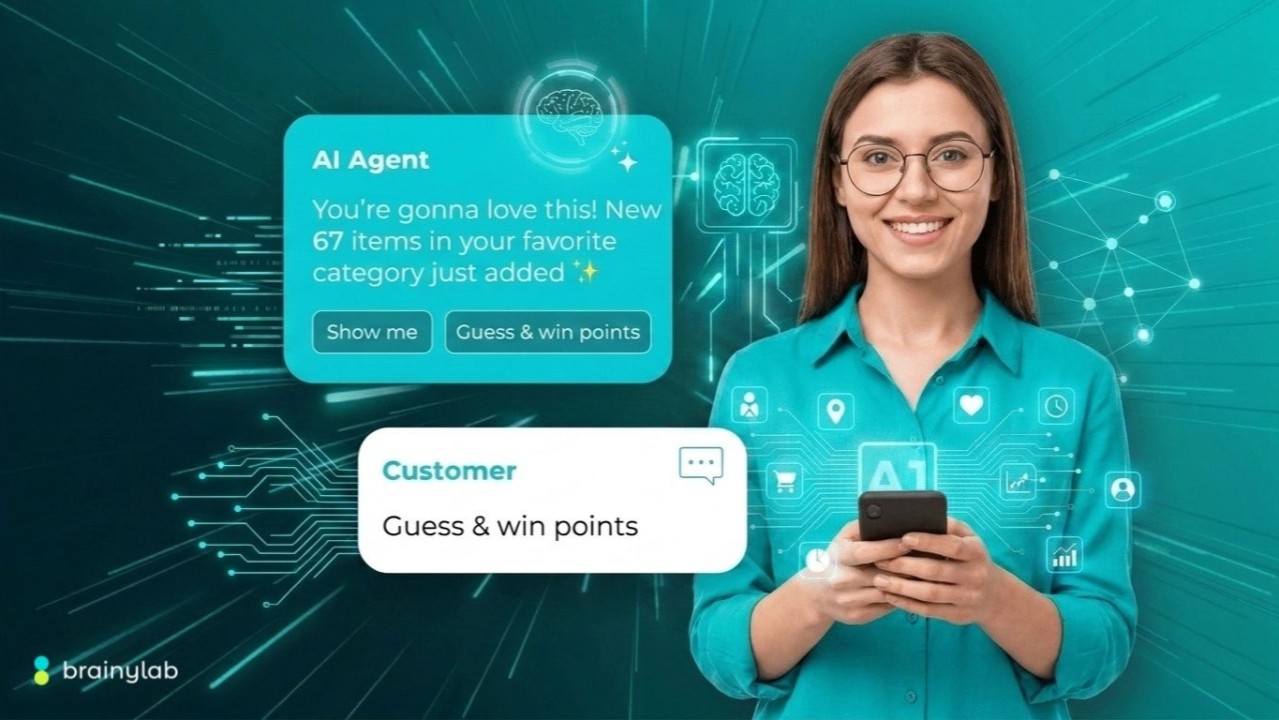
Existing Loyalty programs were not built for AI era. But Loyalty programs 2.0 are emerging right from the core of this new technology.
That's why
Behind the scenes of a lot of loyalty apps is a brand sitting on years of behavioural data that they don't know how to use.
We're talking info about what people buy, when, in what combinations, after which campaigns, with what frequency, by which user cohorts, … That's mostly because the loyalty systems 1.0 (that's what we like to call them) weren't designed to do anything with it beyond awarding points and segmenting an email list.
Everything else; the gamified tiers, the birthday rewards, the partner perks ... is decoration on top of that core loop.
The 1.0 model assumes one thing: the most valuable signal a customer gives you is a purchase.
And that's loyalty before the AI era: a points engine with a CRM bolted on.
And for thirty years that was the right model, because purchases were the only signal a brand could reliably collect. So loyalty programs were built to reward what could be measured.
AI loyalty is something different.
And the difference is not to add a ChatGPT powered chatbot to your loyalty platform, it the actual difference is structure and architecture.
Two things changed at the same time, and most loyalty teams are still adjusting.
One: Today we have more signals of intent than just purchase
A customer now gives a brand dozens of signals before they ever transact. And this is something brands are extremely savvy in advertising, and extremely poor in Loyalty programs.
The same as in advertising, we know that people browse the app, watch a reel, ask a question to an AI agent, abandon a cart, open a push notification, share a product link, leave a review, complete a quiz, talk to a chatbot, scan a QR code at a store.
Purchases are now a small fraction of the data trail.
Two: the cost of acting on those signals collapsed
Until recently, personalising a loyalty experience for every customer required a team of analysts, a segmentation engine, a campaign manager, and weeks of lead time.
Now an AI model can read a customer's full behavioural history and generate a relevant message, offer, or interaction in under a second.
When the signals expand and the cost of acting on them collapses, the underlying model has to change.
The points engine was never designed for this.
We think about AI loyalty as having two layers that work together. Most AI loyalty projects only do one of them, which is why most of them feel incremental.
Layer 1: It uses the data the brand already has
Most loyalty programs collect rich behavioural data and then make decisions based on three or four variables: total spend, recency, tier, maybe category preference. The rest stays in a database.
AI changes the economics of using that data.
A model can read a customer's full history. Purchases, app sessions, interactions, support tickets, campaign responses, even conversational data. Based on that it can make a personalised decision in real time. This specific customer, in this specific moment, given everything we know about them, gets this specific interaction.
One on one.
Layer 2: It expands what gets rewarded
Loyalty 1.0 rewards transactions because transactions were the only thing worth measuring. AI loyalty rewards the full spectrum of customer behaviour and intent.
A few examples of what rewardable behaviour looks like in an AI-driven system:
None of these are purchases, but all of them are loyalty signals. AI loyalty is what makes it economically possible to recognise and reward them at scale.
Side by side, the same customer in two different systems:
Loyalty 1.0: Buys twice a month, gets points, hits a tier, receives a generic offer, redeems sometimes, churns when a competitor undercuts on price. The program sees them as a transaction record.
AI loyalty: Same customer. The system notices they engaged with three product education quizzes, asked the AI agent two questions about a specific product line, abandoned a cart twice on the same item, and haven't visited the app in 9 days. It rewards the engagement, sends a contextual nudge based on the abandoned item, and recognises the customer as high-intent rather than low-recency. The program sees them as a person with intent and active behaviour, not a historic transaction record.
Three key things to consider when starting to build (or rebuild) your Loyalty program:
Brand engagement is shifting from web/app to conversational. Customers are increasingly interacting with brands through AI agents, chat, voice. Traditional loyalty systems weren't built to recognise those interactions as loyalty signals. They must be.
Customer acquisition costs continue to rise. Brands are realising that understanding and retaining existing customers is the highest-leverage thing they can invest in. AI loyalty is one of the few efficient ways to do that at scale. We talked about this birefely in our First Chapter.
The technology cost has come down dramatically. Building an AI-driven personalisation layer on top of a loyalty system was a seven-figure project two years ago. Now it isn't.
Gamification is one of core pillars of any successful loyalty. So its not our first rodeo building sticky and strategically meaningful systems that provide quality touch points AI can use to create personalisation.
We monitor and analyse peoples behaviour in various types of content systems daily, and see where the behaviour is shifting.
Towards creative, meaningful and quality brand interactions. What starts as a fun little reel video should transform into a deeper experience on brands owned media.
And thats were it all starts for modern Loyalty systems. Loyalty 2.0 or AI loyalty. No matter how you wanna call it, remember the name.
We'd love to hear what you think. Have you start tinkering with the question how to use AI with existing loyalty platforms or are you planning on building from scratch with AI in the center of it all?
We can help you brainstorm, align, plan and build Loyalty platform for the AI era.