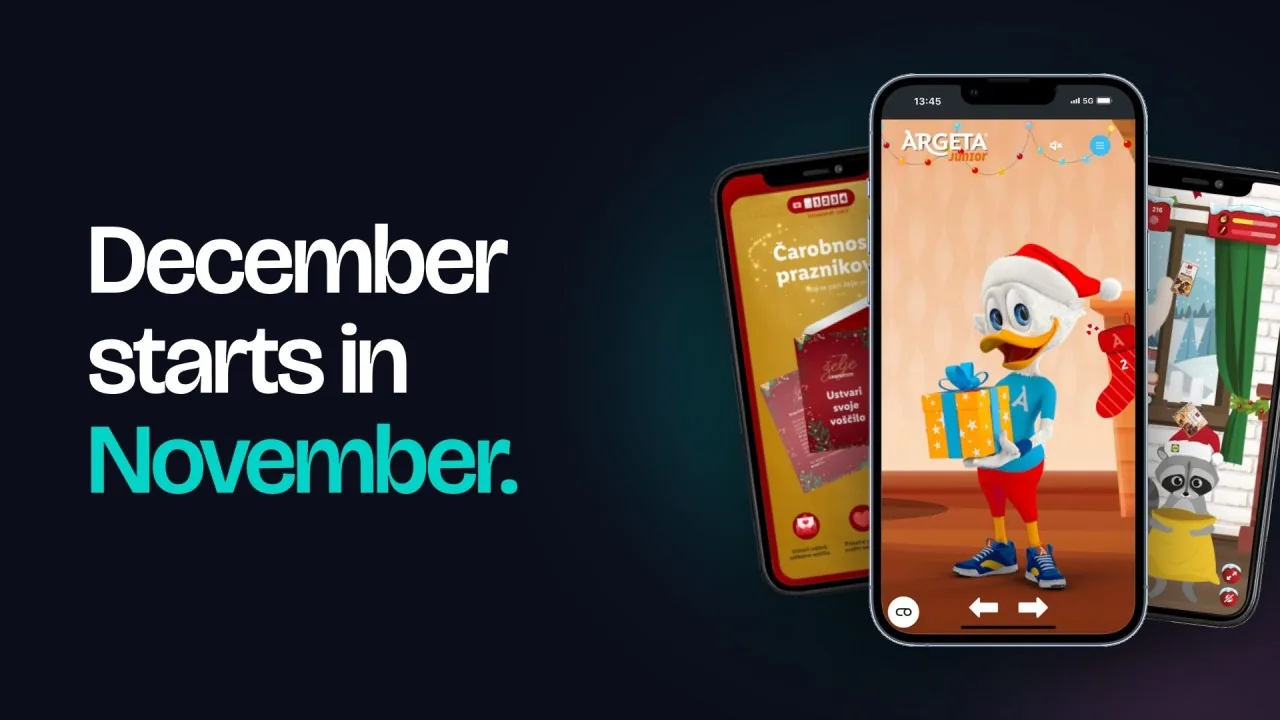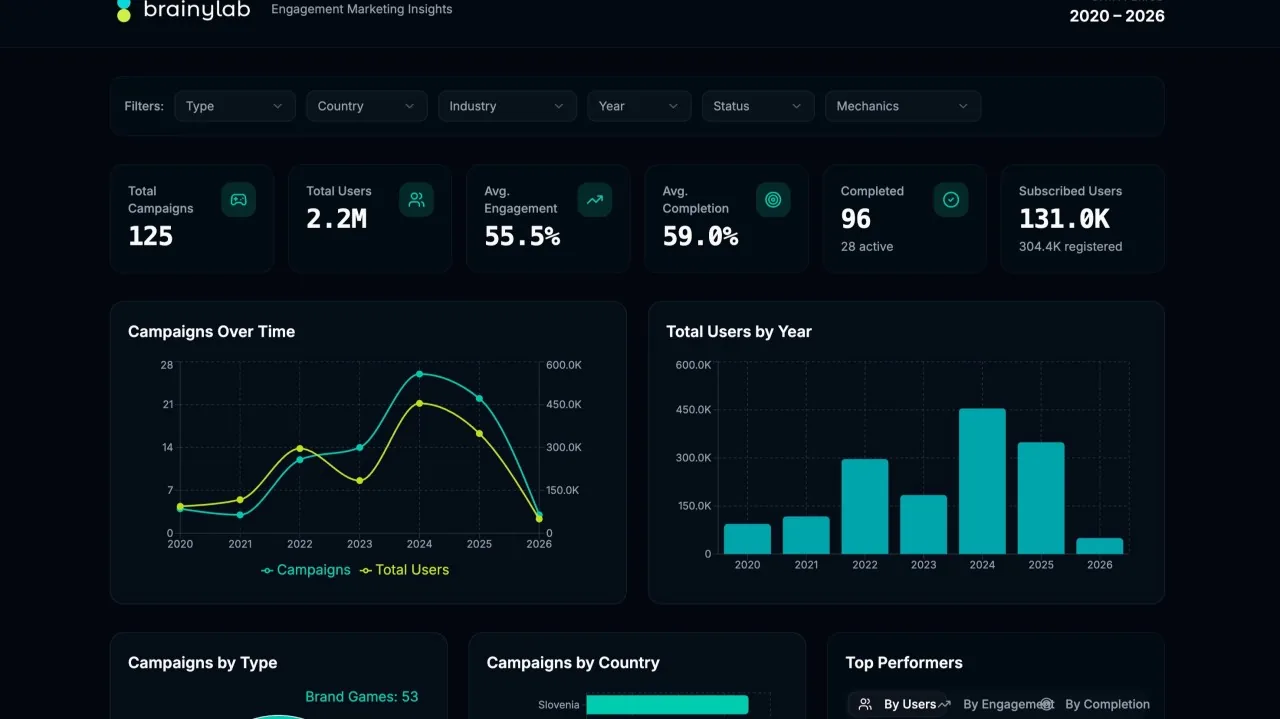
Our team has been helping brands build and launch everything from simple polls and quizzes all the way to advanced marketing games and gamified learning platforms.
So far, our solutions have supported 125 different campaigns across multiple EU markets, reached more than 2 million people, and generated over 130.000 high quality leads for brands we worked with.
This post explains what have we learned and found out along the way, how people behave with different interactive solutions and which gamified tool you should use to make the most of it for your brand.
Gamification Marketing Funnel
Before jumping into any specific tools, lets first overview what a typical user journey in a gamified solution looks like.
A simple and clear funnel is fundamental backbone of every effective gamified solution.
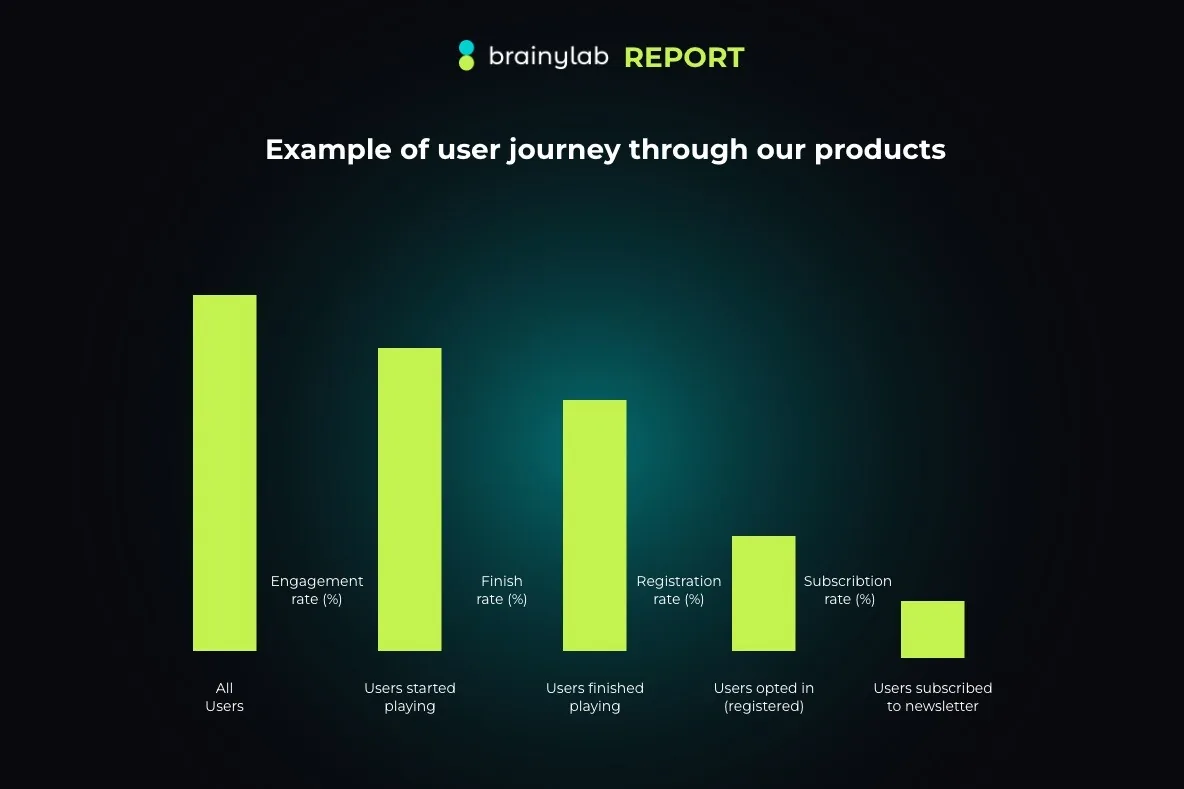
Its quite simple and straight forward:
→ People land on gamified solution landing page → some of them actively Engage into gamified solution (START) → most of them stick all the way to the end (FINSIH) → and then some of them opt-in (REGISTRATION) for a specific campaign purpose → at the end of gamified funnel people subscribe to brands newsletter (SUBSCRITION) → and continue to website or product page (CTR)
To recap: Land → Engage → Finish → Subscribe → Click Through
Lesson 1: Your marketing goal defines your game mechanic, not the other way around
Lets say your main goal is to grab attention and get people involved in a branded experience.
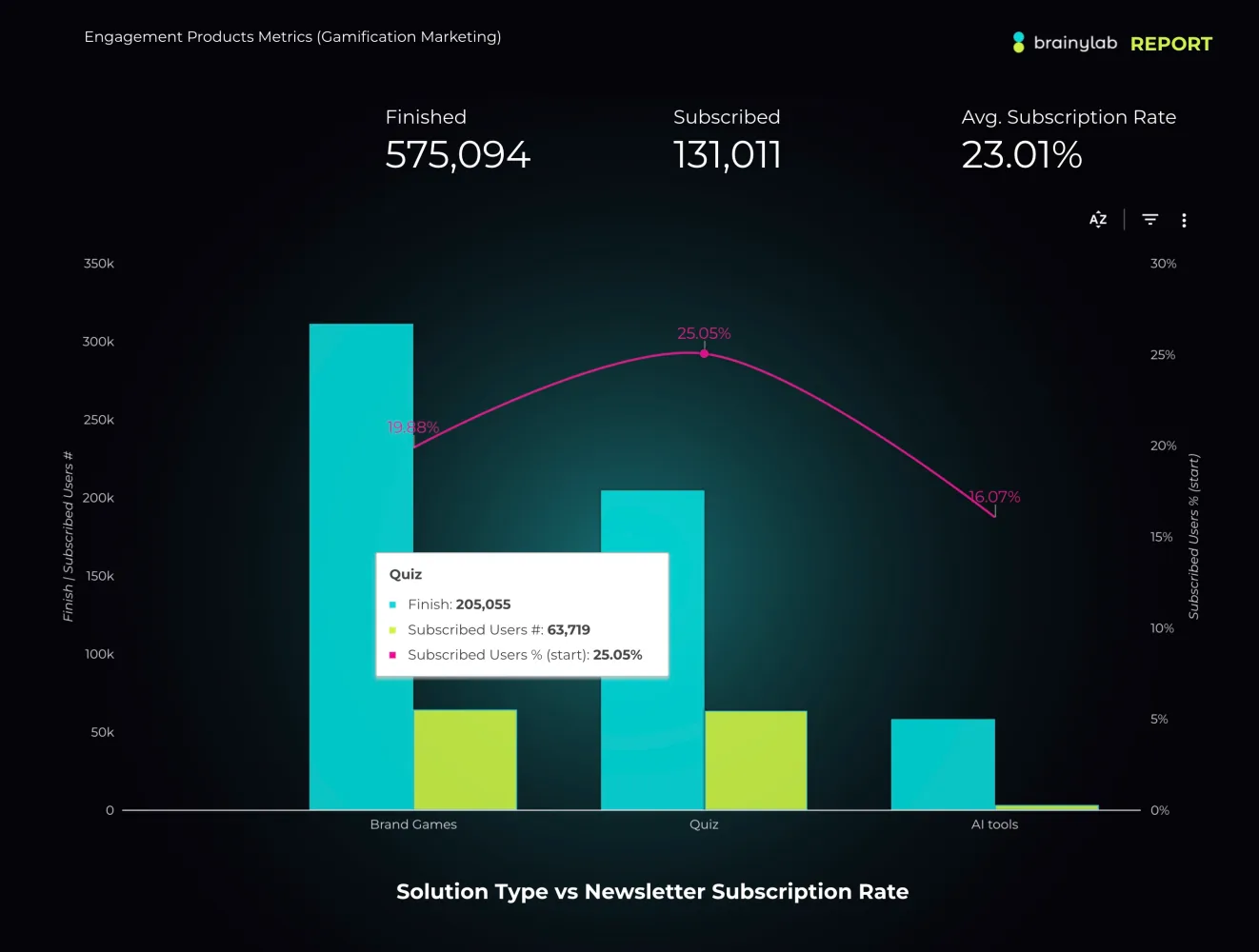
Then you will choose Brand Games, because they have had the highest engagement rate, and will engage all the way from 45 and all up to 65% of your website visitors or ad traffic.
But if your main goal is to turn casual website visitors into your newsletter subscribers, then Quizzes are the best option. They have the highest Subscription rates and will easily subscribe from 20 to 40% of all people who will play quiz till the end.
Lesson 2: Quizzes are the Engagement and Conversion Champions
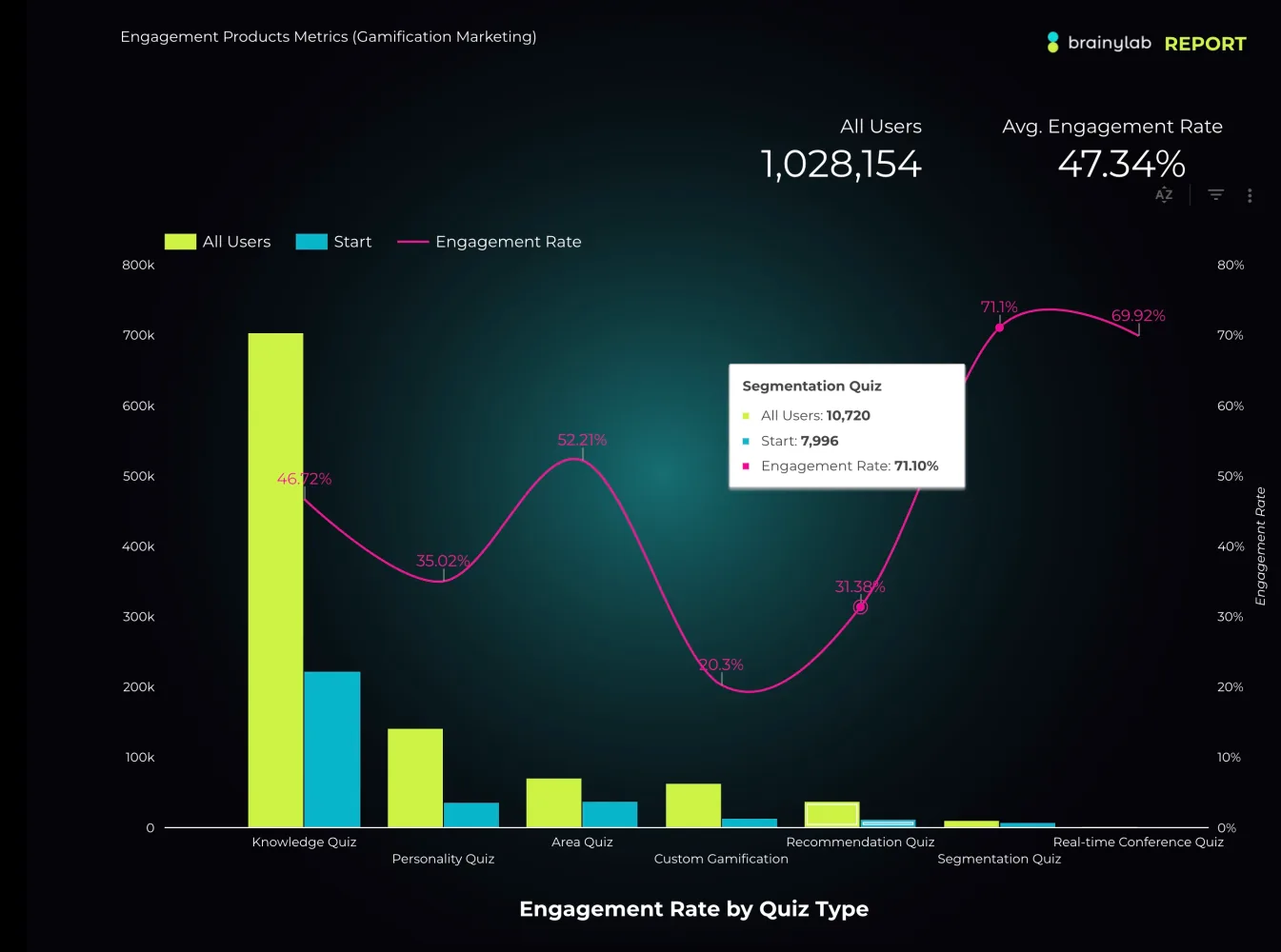
Quizzes are not all the same. The type of quiz has a significant impact on its performance.
The traditional Knowledge Quiz is the most common format because of its edutainment component. It accounts for two thirds of all quiz usage in our dataset.
This mechanic is a reliable workhorse for engaging people around a specific topic. But it works in any topic, really.
The reason it works is because it challenges peoples' knowledge level about a topic, it gives immediate feedback and gratification (or aha moment) and it turns passive scrolling into active participation.
Lesson 3: Games maximize engagement, but timing defines conversion
Brand Games generate the highest start rates across almost all industries.
Tappping games, word games, advent calendars, memory and puzzle games, spin wheels ...
They are simple, competitive and intuitive. People understand them instantly. That is why engagement rates can go beyond 60% of all visitors in well executed campaigns.
But keep in mind one important detail!
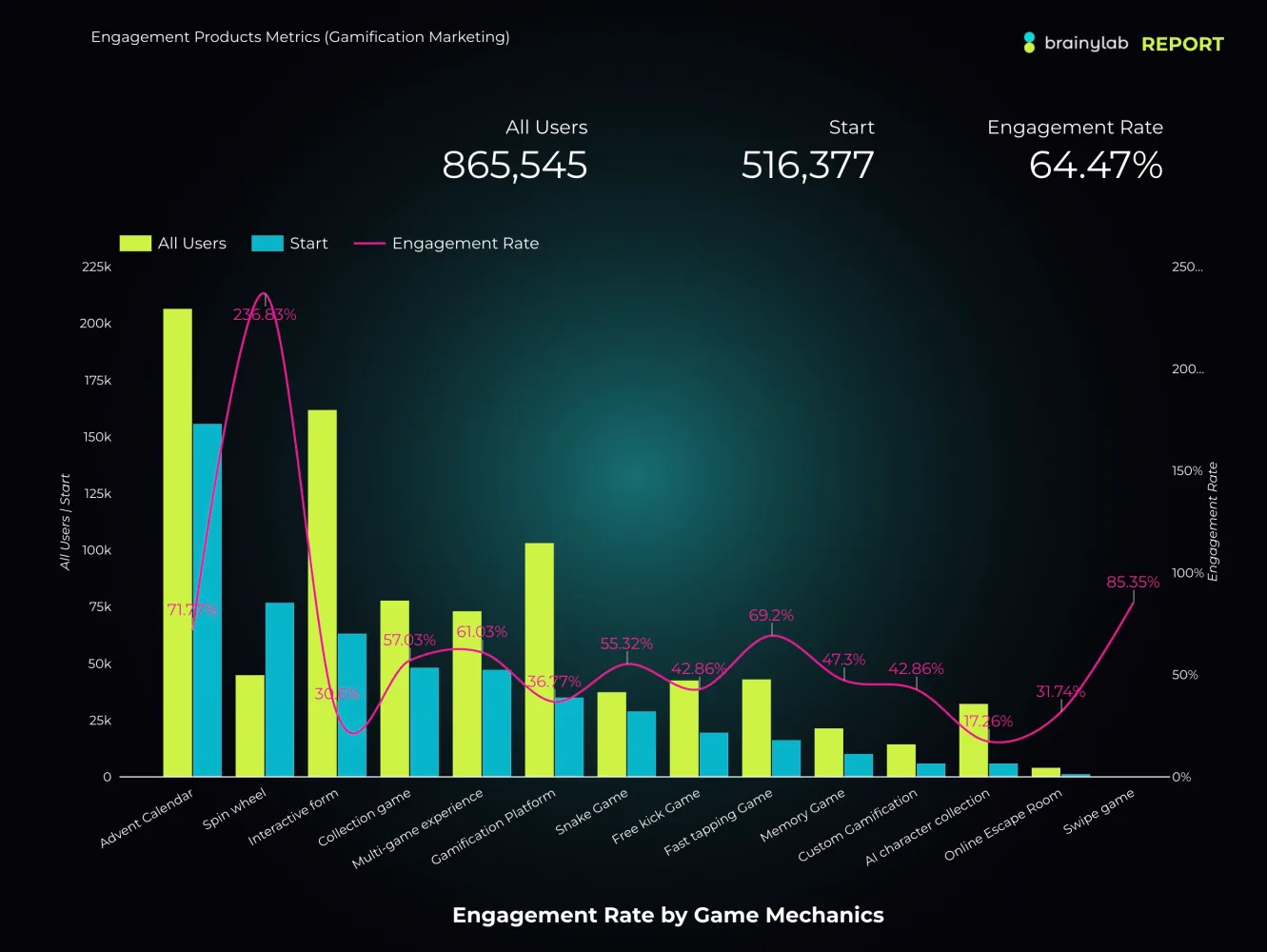
High engagement does not automatically mean high subscription.
Games work best when the opt-in moment is placed after progress, score, or emotional peak. After a result, after a win, or a near miss.
When registration forms are placed too early, and not let people have fun first and play, drop-offs increase dramatically.
So the mechanic is only half of the equation. The sequencing inside the funnel is what turns engagement into leads.
Lesson 4: Progress and feedback keep people inside the experience
The biggest drop-offs happen when users feel lost, stupid or bored.
Clear progress bars, visible points, hints, levels, badges, timers, and small micro-rewards increase finish rates. And increase time with the brand.
In gamified learning platforms, multi-step quizzes, and multi-level games visible progression increased completion by 15–25% compared to static flows without feedback.
People want to know how far they have come.
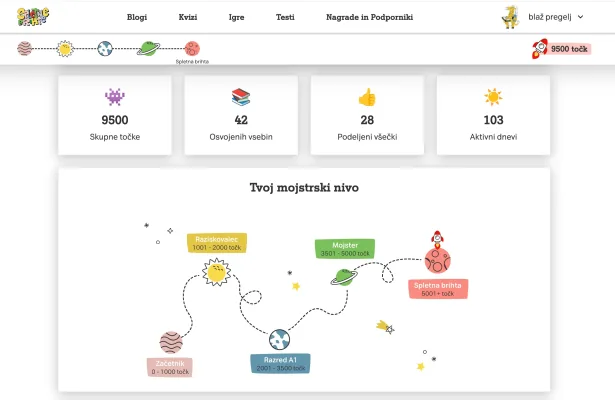
They want to feel movement.
Without progression logic, feedback and encouragement, even good content loses momentum.
With progression logic, average time on experience increases beyond three, four minutes, which is already significantly above typical content website interaction time.
But strategic learning hubs, such as gamified learning platforms, can easily extend those interaction times to 10-15 minutes. Regularly!
Lesson 5: Long-term platforms outperform one-off campaigns
Single campaigns generate spikes and drive campaign results, while platforms build habits and loyalty.
When brands move from single-campaign gamified activations to thought-out strategic systems like quiz funnels, games with retention loops built in, and hubs with profiles and history, the data (and loyalty) compounds.
Return visits increase, first-party profiles become richer, segmentation improves over time. Mailing list grows and distribution becomes cheaper.
This is where gamification stops being a campaign tactic and becomes an owned engagement asset.
How to use these learnings in your next marketing campaign?
To make the most effect for your brand when implementing gamification, keep in mind:
- If you need reach and engagement, use Games.
- If leads, segmentation, and edutainment is your goal, use Quizzes.
- If you need to improve your audience retention and long-term engagement, build a Gamified Platform.
And always design the funnel first.
Land (Where?) → Engage (Why?) → Finish (How?) → Subscribe (Whats innit for me?) → Click Through.
The mechanic supports the goal. Structure, consistency and data drives the results.
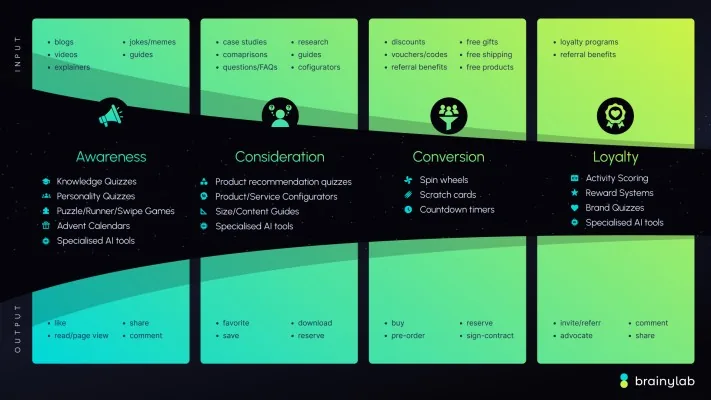
If you are planning your next campaign and want to understand which format fits your objective, feel free to reach out.
We are happy to review your goal and suggest the right interactive approach.
Dont stop here ... keep exploring!
See our Engagement Marketing Insights dashboard https://report.brainylab.io